
Care Homes: A UV-C Approach to High-Touch Surfaces
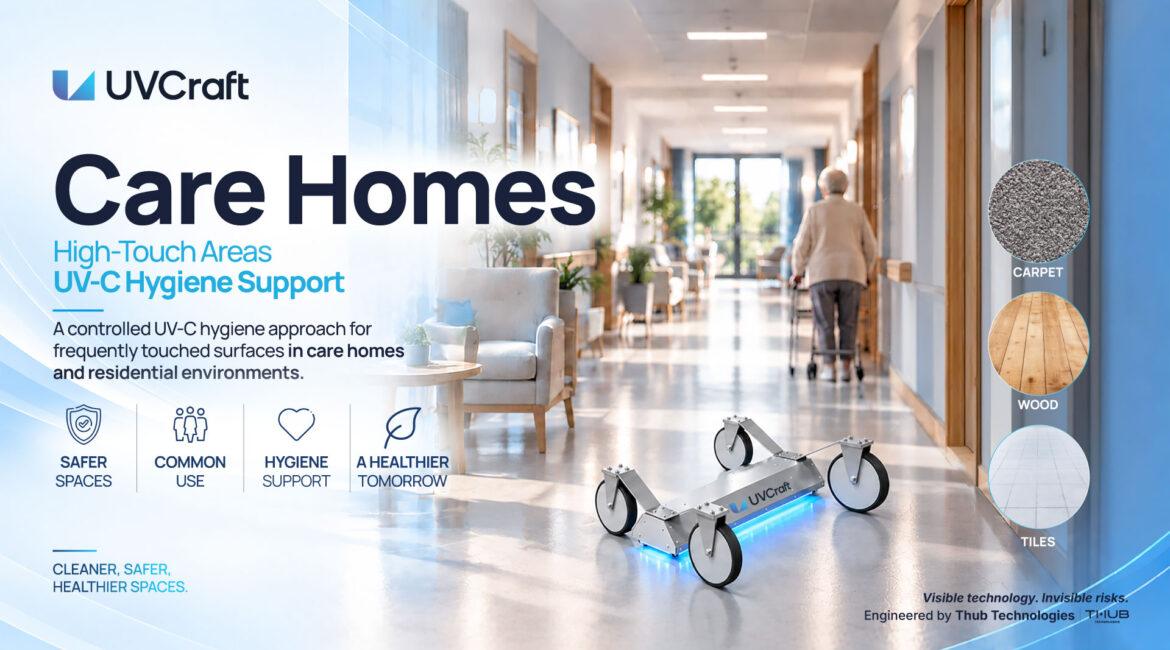
In a care home, door handles, bed rails, call buttons and shared equipment may be touched by residents, staff and visitors throughout the day. Identifying these frequently touched surfaces is an important part of the infection prevention and control plan.
Start with your daily routine
Every care home uses its premises in different ways. A practical plan begins by mapping out the surfaces people touch most frequently: handrails in communal areas, lift buttons, grab rails in bathrooms, bedside tables and mobility aids. Cleaning responsibilities and frequency can be determined based on how these areas are used. During an outbreak, surfaces that are in common use and touched frequently may need to be cleaned more often.
Where can UV-C be used?
For a suitable surface or object, a properly assessed UV-C system can add a disinfection step to the existing routine. Physical cleaning is always the priority: UV-C does not remove dirt and does not replace the care home’s cleaning and disinfection procedures.
The specifics of the application are important. Distance, angle and shadows all affect how much UV-C light reaches a surface. A recessed control button or the underside of a handrail may be exposed to less light than an unobstructed surface. Therefore, care homes should assess the device based on the specific objects they wish to treat, rather than assuming that a single result applies to the entire room.
Put residents’ safety first
A care home is also the residents’ home. Any UV-C treatment must be suitable for people moving about the rooms, receiving care and using communal areas. Direct exposure to conventional UV-C light can cause damage to the skin and eyes; therefore, the design of the equipment, access controls, staff training and operating procedures must all be carefully assessed. UV-C light must never be directed at residents or staff for the purpose of disinfection.
Before implementing a system, managers may ask the following questions:
Which surfaces or objects is it designed to disinfect?
What is the test evidence supporting this specific use?
How are shadows, exposure time and dose taken into account?
What prevents residents, visitors and staff from being exposed?
Is the method compatible with the relevant materials?
How will staff record the use of the device and carry out its maintenance?
A well-thought-out approach to care services
An effective UV-C programme begins with a clear objective. Identify frequently touched surfaces, maintain consistent cleaning practices, and select a system whose performance and safety measures are suited to your environment. In this way, UV-C can be considered as an additional measure within the care home’s broader infection prevention plan.
Discover a thoughtful approach to UV-C with UVCraft. Get in touch with our team to discuss your care environment, the surfaces you wish to treat, and the safety requirements that shape your daily routine.